My Journey with Technology- Why I bet on Augmented/Mixed Reality back in 1998.
Last night, 7 May 2019, Google made Augmented Reality(AR)/Mixed Reality (XR) mainstream. This comes as just another news to many. But for me, who's anticipated this giant leap in technology decades ago and prepared for it ever since, this is a moment to cherish.
Today, after this landmark announcement, with the world having decided the future it wishes to create, I look around and notice that I stand a few paces ahead of the world; already building that future. I’ll tell you more about it. Read on.
In the News
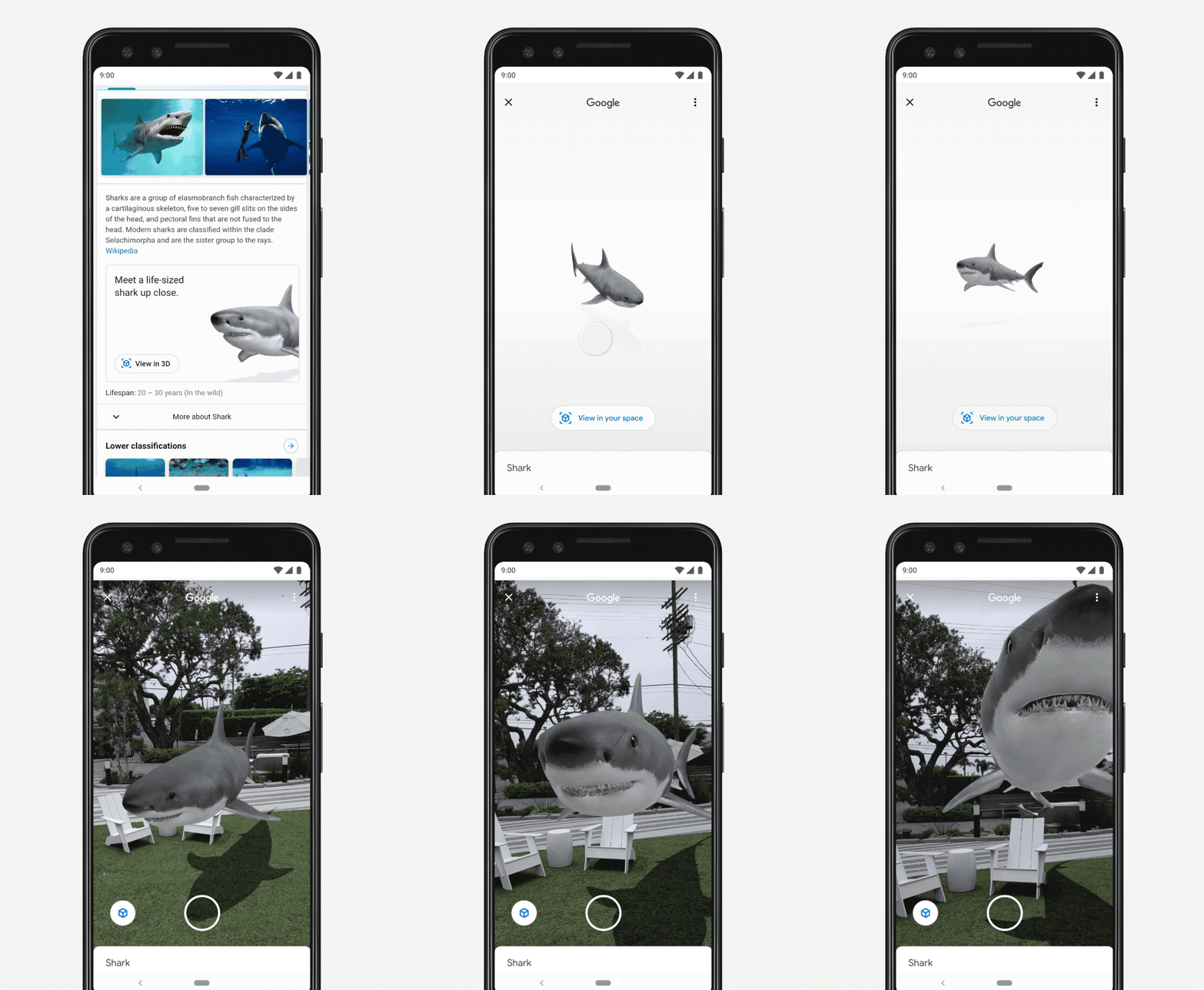
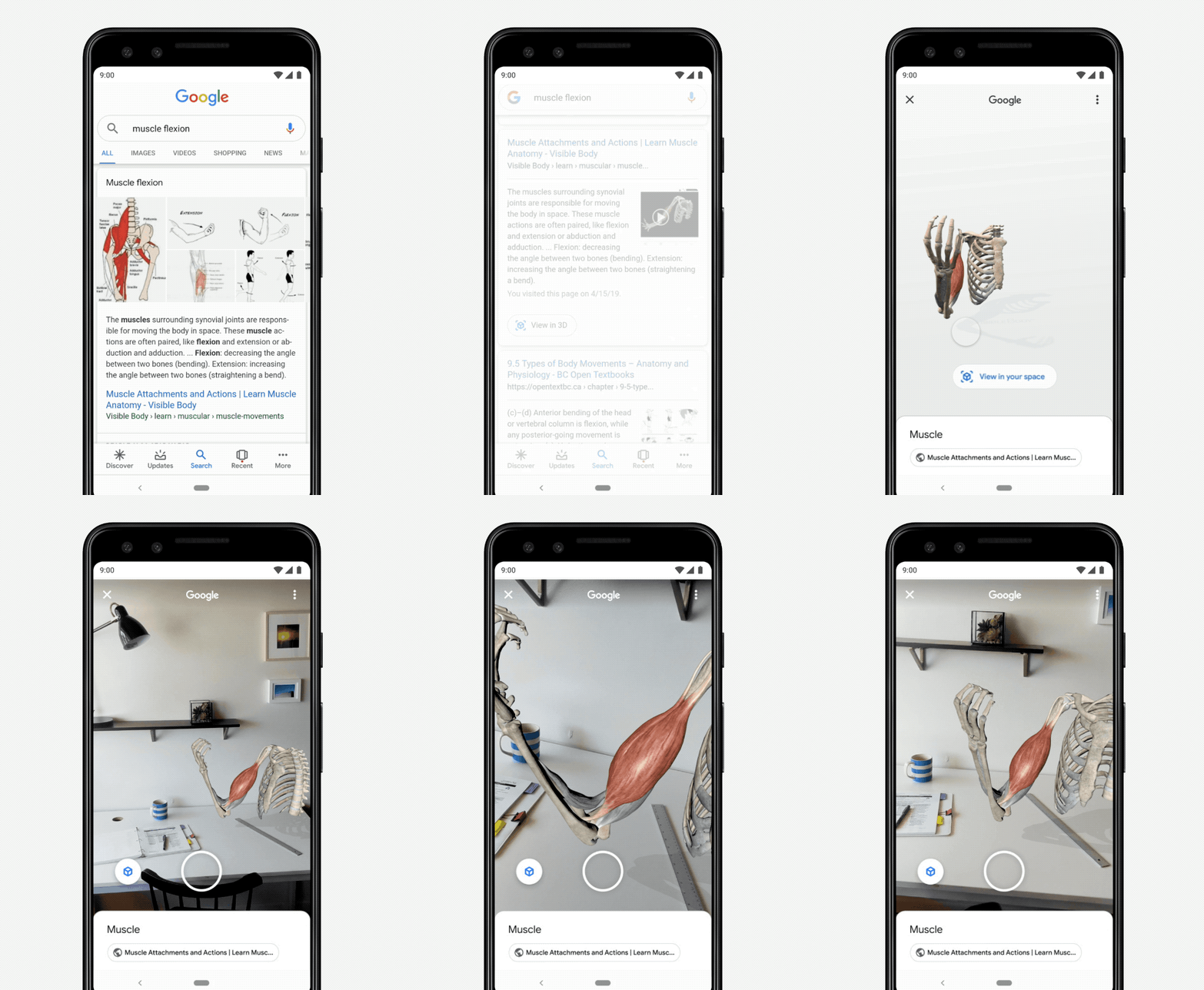
Once considered science fiction, AR/XR is now as integral to user experiences as Google search is. Google added Augmented Reality to its search — the most widely used function by billions across the globe. If you are not sure what I am talking about, here is a demo-
My Journey with Tech
Right from my early days, computers and programming intrigued me. “Intrigued” is probably an understatement. I began dabbling with C & Unix in my 7th grade, and soon after, I was convinced that it was the future. And eventually, it dawned upon me that everyone had to learn to program.
Why learn to program?
I believed that it would be the language of the future, just like how we learn English, Hindi or Chinese to communicate with non-native speakers, we all had to learn the skill to communicate with computers.
Why communicate with computers?
For me, computers were much more than just devices, they were intelligent machines which enhance human ability by a factor of millions, communicating effectively with them was so important to me that it shaped my today.
I invested 2 decades of time and dedicated effort to learn and master those skills. It wasn’t easy. I had to push myself, so much, that I had to work summer jobs to help pay for an advanced Unix course at a small institute in Lakdi-ka-pool, Hyderabad, India.
During my first such job, I was teaching basic computer usage to the teachers at my brother’s summer school.
At that time, I was 11 years old. This was May 7, 1998.
The mind of a 11 year old.
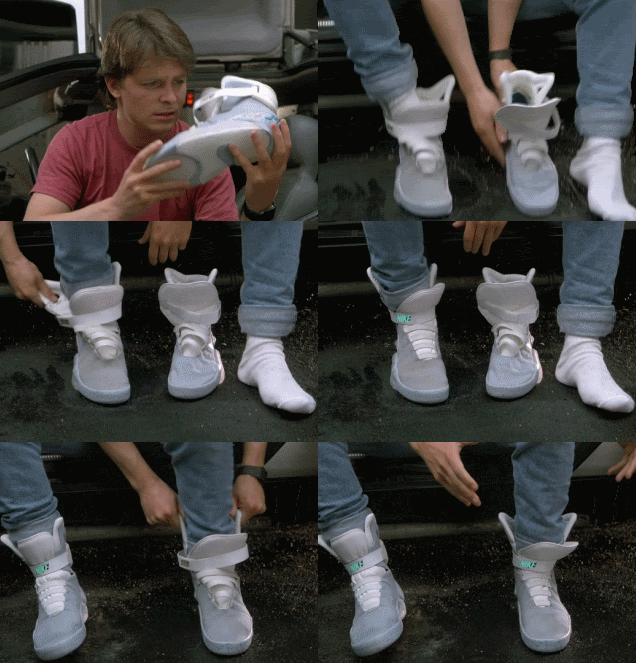
Like all 11-year-olds, science fiction was my dream for the future. I imagined a world where computers would help improve our lives in many ways. My future had flying cars, intelligent robots, smart electronics, space travel and, of course, self-lacing shoes amongst others.
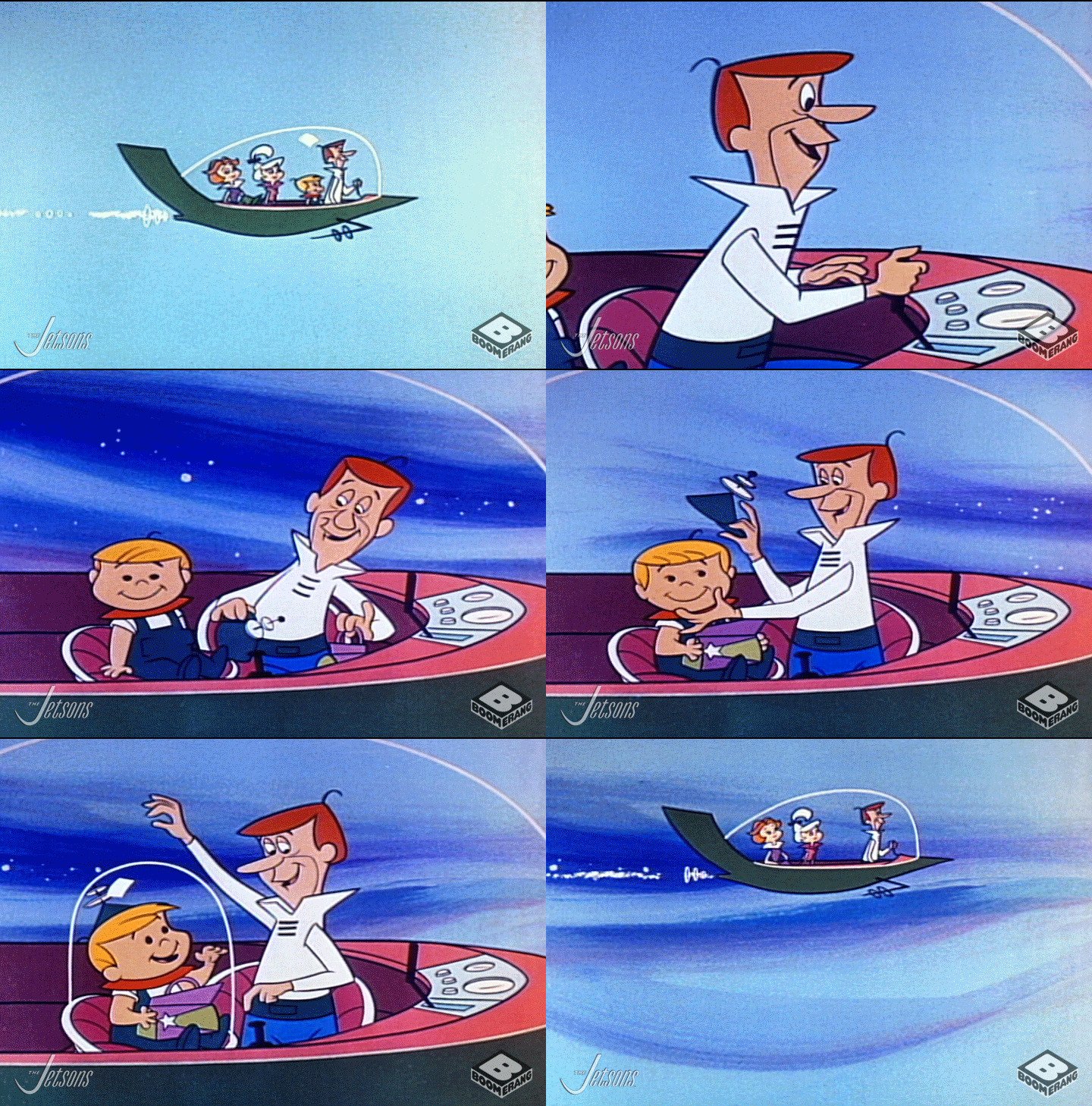
Of all these technologies, there was one common denominator — the interfaces. For a user, the magic is always in the interaction and experience. They hardly know the mechanics and implementation, nor do they need to. I would always wonder when this experience would become seamless and enable users to interact with technology in natural 3D space, not via physical remote controls or handheld devices.
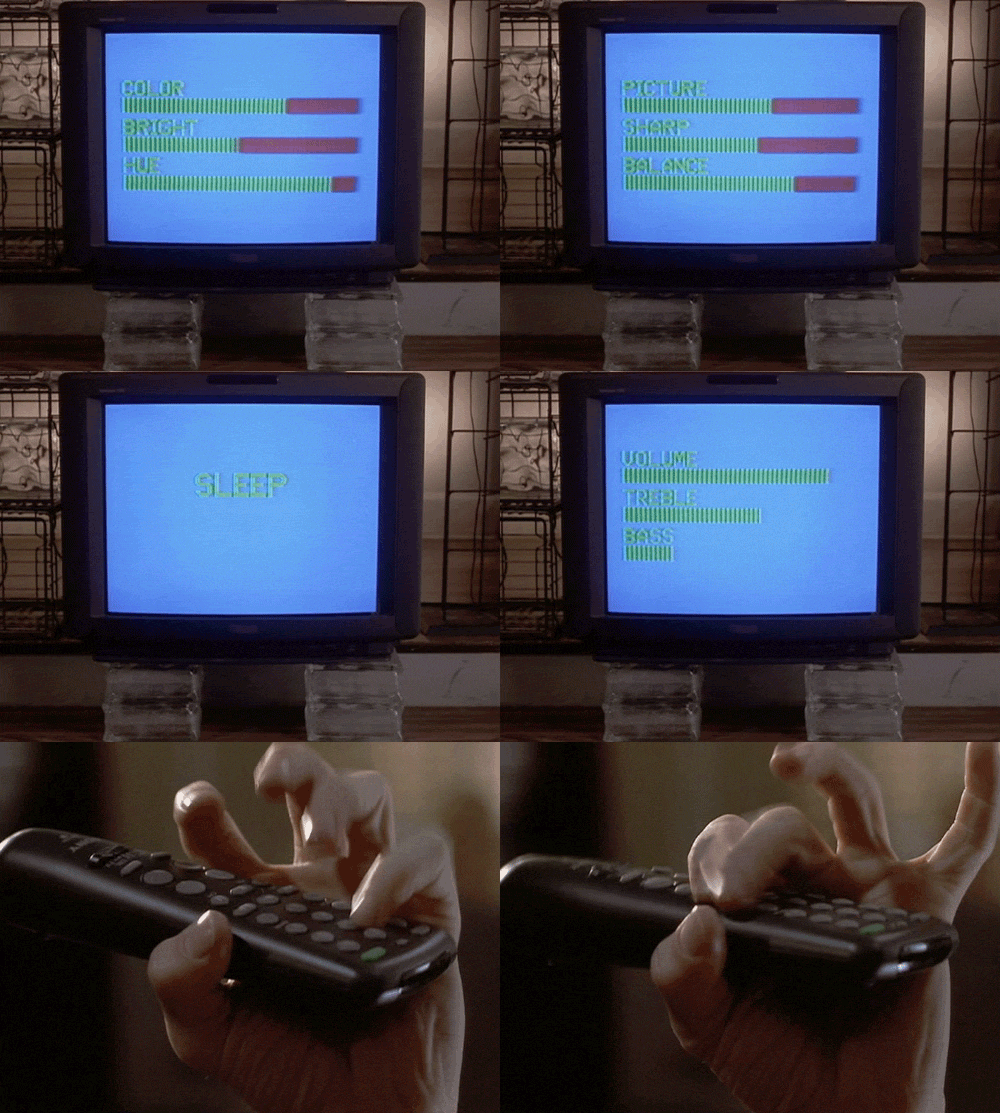
I didn’t know it then, but what I was imagining then, was what we know today as mixed reality..
Then came along Marvel, with Ironman 1, which completely blew my mind. That, for me, was the stuff of my dreams. When I saw it, I knew that is what had to be done; that it is the natural progression of technology; that, if not something better, had to be the next iteration of Human-Computer Interfaces — the most efficient means of communication with the intelligent machines.
I got introduced to this 10 years ago. Of course, in 2008, the cost of building something similar and the technology, infra available was not conclusive to making it a reality.

It may be a coincidence that I watched it exactly 11 years ago, on the 7th May 2008.
The last decade
Since 2008, I have dabbled with many iterations of technology; building amazing experiences that were used by many hundreds of thousands of users. I even tried hard to build my own mobile devices with its own version of Android OS. Some succeeded, some failed.
Coming from a small middle-class family with limited access to funds, and located in an emerging city like Hyderabad, which had little access to technology or funds — things weren’t really in my favor. But I never gave up.

Regardless of what I built, there was always something missing. I had to perfect the art of communicating with technology. The eco-system to accomplish this was just getting better. The physical size of hardware was shrinking and the computing power was growing, both exponentially. Unknown to many, the foundations for future computing were slowly being built.
June of 2017, everything changed. Apple released the ARKit and almost a year later, in May 2018, Google released ARcore. For me, that was it, my calling. Technology, infrastructure and the overall user adoption had all aligned at the perfect point to enable and drive the next generation of beautiful computing experiences.
On May 7, 2018, exactly a decade later, I decided it was finally time. My goal was to contribute heavily to the next big iteration of Human-Computer Interfaces. I knew this was the step in the evolution of computing, the next iteration to the iPhone 1 released by Steve Jobs in 2007.
After a difficult 20 year wait, I had the opportunity. This time, I bet big. So big, that I went all in.
Augmented reality is not just science fiction anymore, why?
Mobile phones and the mobile camera, the most powerful visual tools humans ever had access to, have become so integral to our lives that they have become a direct extension of our brains.
Today, these devices have so much power packed in them that they can easily produce amazing experiences and push the limits of human-computer interfaces. Over the last 12 months, we worked very hard, often, over 16 hours a day building our Mixed Reality Expertise and platforms that can help us easily ship a wide range of Mixed Reality experiences to power the next generation of Human-Computer Interfaces.
Augmented Reality or Mixed reality should be seen as the next major iteration in HCI. And I can’t stress this enough.
What about happening Tech? AI, IoT, Robotics and Other?
The latest advancements in AI, Robotics, IoT and other emerging technologies only become so much more powerful with better user interaction. Especially with the adoption of Mixed reality experiences. Again, take Ironman for example.
Up until now, users were limited to 2-dimensional experiences, with limited space on a flat screen. It is no secret that mobile handset manufacturers are pushing themselves to increase the available screen size in so many ways to maximize user experiences (bezel-less, notch-less, foldable screen, etc). But the experience still remains 2D - limited to a screen, which can only be navigated on a small surface. That, in a way, is like speaking in muffled voices when you can speak directly. Imagine how efficient we can get and how much more we achieve if we add a whole new dimension of interaction with machines — in 3D?
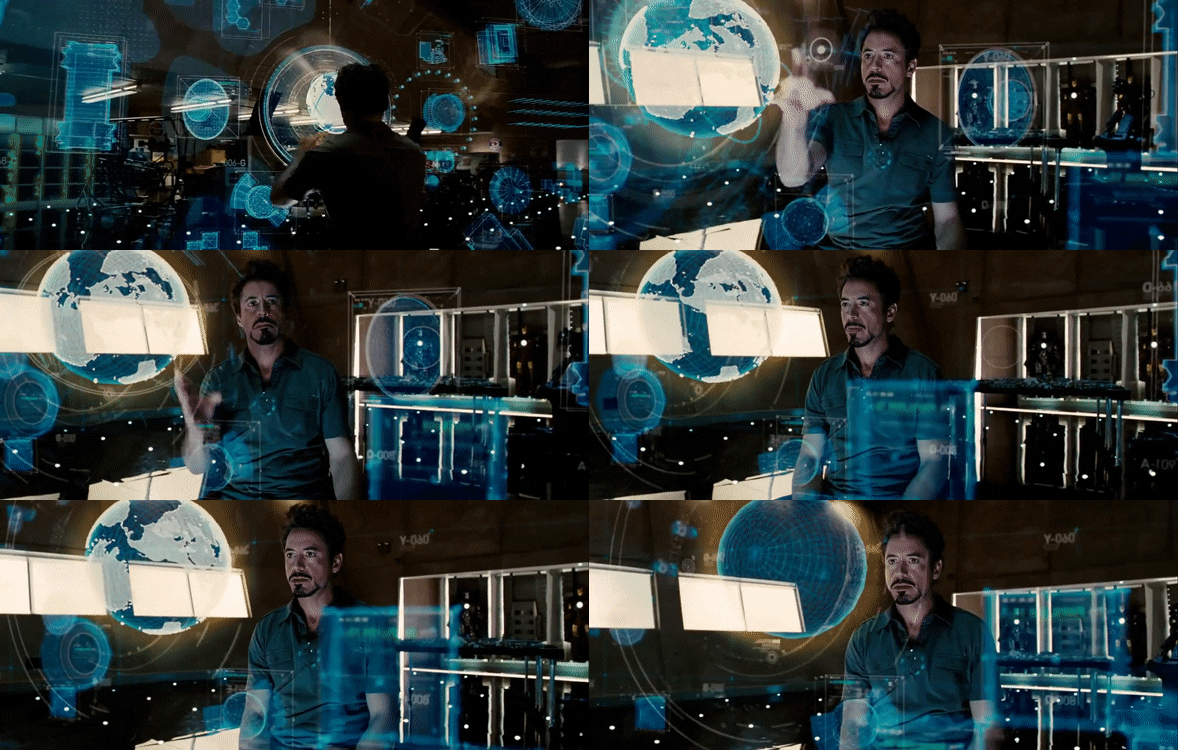
Augmented reality, is the next iteration of the human-computer interfaces. It takes user engagement and immersion to a whole new level. Imagine IoT sensors communicating in XR in real-time, in a 3D space and via Gestures!That’s awesome. No, wait, that’s the Future.
What is HCI?

If you look at Human-Computer Interfaces, it all started with punched cards, then the command line, the GUI and Mouse. For many years, that was it. Supporting technologies rapidly emerged to maximize the overall utility, efficiency and experiences. The biggest driver of our recent time, the internet as we know it today, would not have been possible without a certain level of maturity in the Human-Computer Interfaces.

For many years, we perfected this technology and interface and moved towards handheld devices. Though feature phones existed, it was mostly limited to a certain group of users.
The next big leap was when Steve Jobs and Apple introduced everyone to the “iPhone”, the smartphone in the real sense. This was the beginning of another generation of Human-Computer Interfaces, the experiences changed so much that computers and technology went from being applicable to “a select group of users” to “everyone”.

These smart devices came to be used by hundreds of millions of users, spending billions of dollars every year. This communication device, the smartphone, drove the highest adoption ever, many times more than any PC or mac combined, and that too, within such a short span of time.
What’s next?
For me, the next iteration of HCI is Mixed Reality. It only makes sense, since the industry leaders such as Apple, Google, Microsoft, etc., all are spending billions of dollars every year, on perfecting this technology.
Recently, Tim Cook, the CEO of Apple said:
“ life without AR will be unimaginable in a few years”,
I can’t agree more. This statement, coming from the leader of Apple — the world’s authority in developing amazing interfaces, is a validation of my vision and passion that I’ve carried for over 2 decades. This belief has only amplified many-fold since Google’s keynote last night, 7th May 2019.
Strange coincidence, since it came exactly a year after I started my journey.
Again, Mixed Reality is the interface of the future and Google made it mainstream and easily accessible to everyone by directly integrating it into its search results. This is a big deal
Future of AR & XR:
Over the coming years, companies like us will introduce cutting edge XR technology and experiences to transform Human-Computer Interfaces and improve human efficiency. From Education to Industrial design, Retail to Entertainment, Tourism, Travel, and Military, there is no space that cannot be improved by a factor of 10,000 with the implementation of better interfaces. And to do that, the answer is — some variation of XR.
If you look from where I stand, the future is better than what the movies have ever shown us and I can’t wait to bring it to everyone.

Comments
Post a Comment